
Internationality doesn't start with translation.
Whether it’s a China Desk, an Italian Desk, or international patent and legal consulting: Anyone serving clients from different countries needs a website that reflects this focus.
Today, texts can be translated easily—and, if desired, largely automatically. For a website with two languages and manageable content, this is usually straightforward to organize.
Things get more interesting when multiple locations, practice areas, and points of contact are added. Then it’s no longer just about language, but about determining which information is relevant for which market.
Not only can the content differ, but so can the emphasis placed on individual services. While a particular practice area may play a more supplementary role for the German market, it can serve as a central entry point for international clients.

Same department. Different contacts.
Here’s an example: A law firm offers corporate law services both in Germany and at an international location.
On the German-language version, the Munich partner should be listed as the contact person, while on the international website, the colleague abroad should be listed. Perhaps both should be mentioned.
Which solution makes sense depends on the firm’s organization, its target audiences, and its client structure.
There is no one-size-fits-all right or wrong answer here. The key is to ask the right questions.
What services are offered at which locations? Which professionals are responsible for which markets? Should all language versions display the same content? Are there country-specific services? And who will maintain this information in the future?
We clarify precisely these kinds of details right from the conceptual phase. Because we know from experience: The answers determine not only the website’s structure but also its future data management.
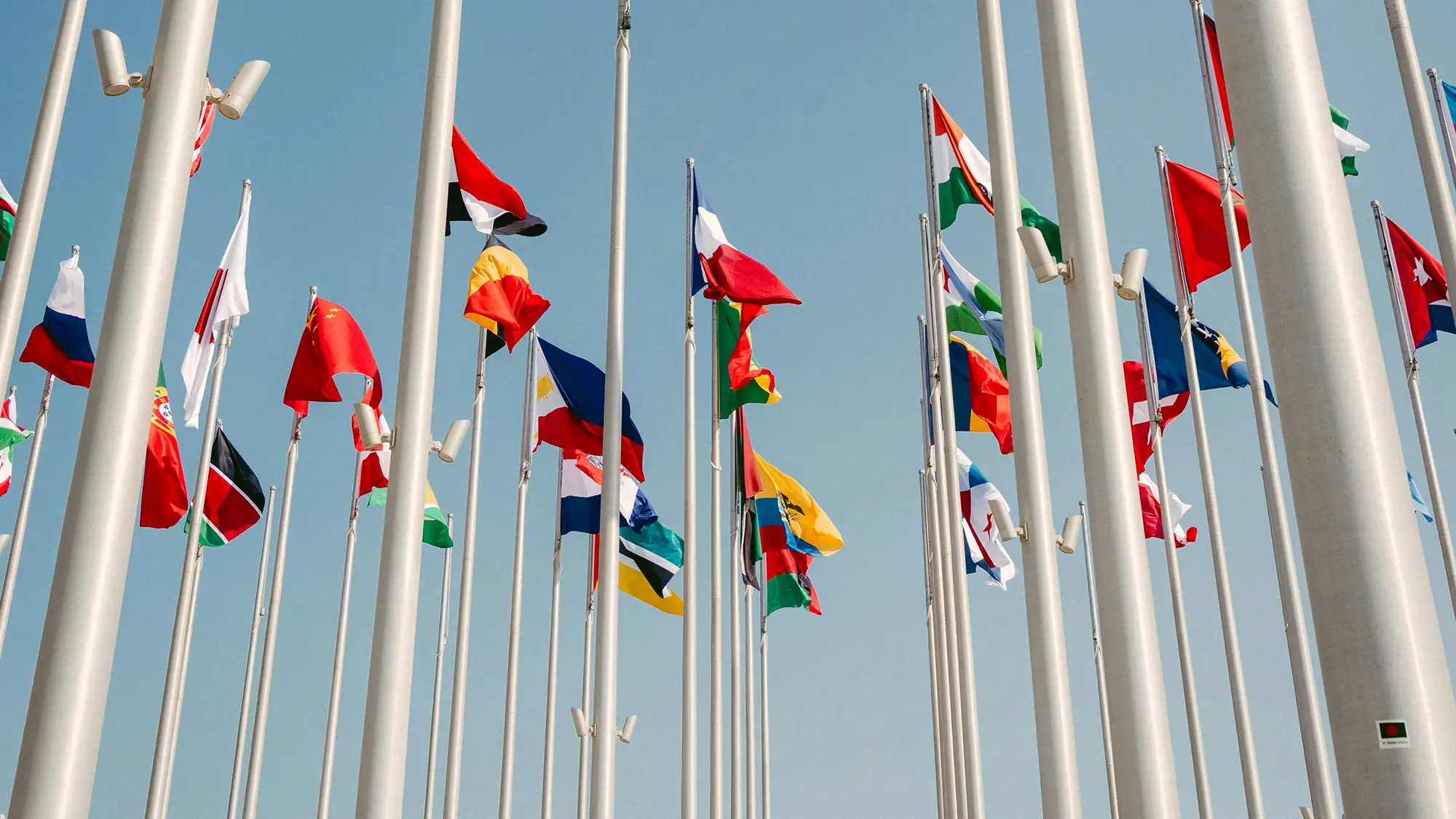
Where the wheat is separated from the chaff: in data management.
For large-scale international law firm websites, the quality of the technical implementation is most evident behind the scenes.
Person profiles, locations, practice areas, and language versions must be logically linked to one another. Ideally, information is maintained centrally and displayed where it is needed.
For example, if a partner’s area of responsibility changes, this information should not have to be manually corrected on numerous subpages.
At the same time, the system must be flexible enough to accommodate exceptions. A practice area may be available in three languages, while an associated article may be available in only one. A contact person may have international responsibility, while a local colleague may also be listed on a specific language version.
A well-designed data model takes such relationships into account from the very beginning. Content can be specifically assigned, displayed based on language, and expanded as needed.
This saves maintenance effort in the long term, reduces sources of error, and keeps the website manageable even as its complexity increases.

WordPress or TYPO3? The number of languages makes a difference.
For smaller law firm websites with one or two languages, WordPress can certainly be a good choice. However, with three or more languages, as well as additional locations, practice areas, and complex content relationships, managing the site can quickly become overwhelming.
In these cases, we prefer to use TYPO3.
This CMS offers powerful multilingual management, structured data records, granular user permissions, and flexible options for linking content.
Clear editorial organization is especially important when multiple employees at different locations are maintaining content. Who is authorized to edit which language version? Which content requires approval? How can you tell if a translation still matches the current source text?
Such questions should not arise only once the system is already in operation.
Choosing a CMS is therefore not merely a technical decision. It influences how cost-effectively and reliably an international law firm’s website can be operated in the long term.

Getting Found Internationally: SEO and AI Visibility.
In addition to the technical structure, international discoverability plays an important role.
Search terms vary depending on the language and target market. A direct translation of German keywords does not necessarily result in the right search queries abroad.
That’s why content must also be viewed from the perspective of the respective target audience. What terms do international clients use? Are they searching for a legal practice area, a specific consulting service, or a contact person for a particular country?
Added to this are technical requirements such as unique language URLs, hreflang tags, and a clear mapping of services, locations, and contact persons.
A clear structure is also helpful for visibility in AI-powered search systems: What expertise does the law firm offer? In which countries does it operate? Who is responsible for which area?
Effective international SEO and GEO optimization therefore begins right at the planning stage—not just once the website is complete.
Think globally. Structure intelligently.
An international law firm’s online presence doesn’t have to be complicated. The key is to identify the complexities early on and implement them in a technically sound way.
This requires experience, asking the right questions, and consulting services that go beyond design and translation. After all, anything overlooked during the conceptual phase can result in significant maintenance efforts later on.
A good international website does more than simply present multiple language versions. It connects markets, services, locations, and people into a cohesive, functional digital presence.
So that the website not only functions in multiple languages today but can also grow alongside the law firm tomorrow.

STILL IN THE RACE?

We’ll figure out if we’re a good fit during our conversation. vierzehn02 develops corporate websites—from positioning and concept development to UX/UI design and technical implementation.
And yes: We ask quite a few questions at the beginning.

